For years, the outsourcing conversation in the U.S. revolved around two destinations: India and the Philippines. Both markets matured, competition grew, and pricing climbed. Meanwhile, a quieter shift has been building. African outsourcing services have been gaining serious traction among U.S. businesses — not as an experiment, but as a deliberate strategic decision. Companies ranging from funded startups to established mid-market firms are discovering that Africa offers something the traditional outsourcing hubs are increasingly struggling to deliver: genuine cost efficiency, English fluency, and a talent pool that is young, motivated, and growing fast.
This article breaks down exactly why that shift is happening — and what it means for U.S. businesses looking to scale smarter.
The Traditional Outsourcing Market Has Changed
When U.S. companies first began outsourcing in large numbers, the math was simple: labor costs in India and the Philippines were a fraction of domestic rates. That gap has narrowed considerably over the past decade. Wage inflation, increased competition for skilled workers, and growing demand from European and Australian markets have all driven up costs in the traditional BPO hubs.
That is not a criticism of those markets — the quality of talent in both India and the Philippines remains high. But it does explain why procurement teams and operations leaders at U.S. companies have started asking a different question: where is the next generation of outsourcing value?
Africa — and particularly countries like Zimbabwe, Kenya, South Africa, and Ghana — is the answer an increasing number of them are landing on.
What Makes African Outsourcing Different
A Workforce That Speaks Business English
One of the most common concerns about outsourcing is communication quality. Accents, idioms, and cultural misalignment can erode the customer experience fast. This concern largely dissolves with much of Sub-Saharan Africa, where English is the primary language of business, government, and education. Zimbabwe in particular has one of the highest English literacy rates on the continent — a byproduct of its education system and historical ties to British curriculum standards.
For U.S. businesses that need customer-facing roles filled — whether that is live chat, email support, or inbound calls — this matters enormously. Customers rarely notice they are speaking with someone outside the U.S. The experience stays seamless.
Competitive Pricing Without the Quality Drop
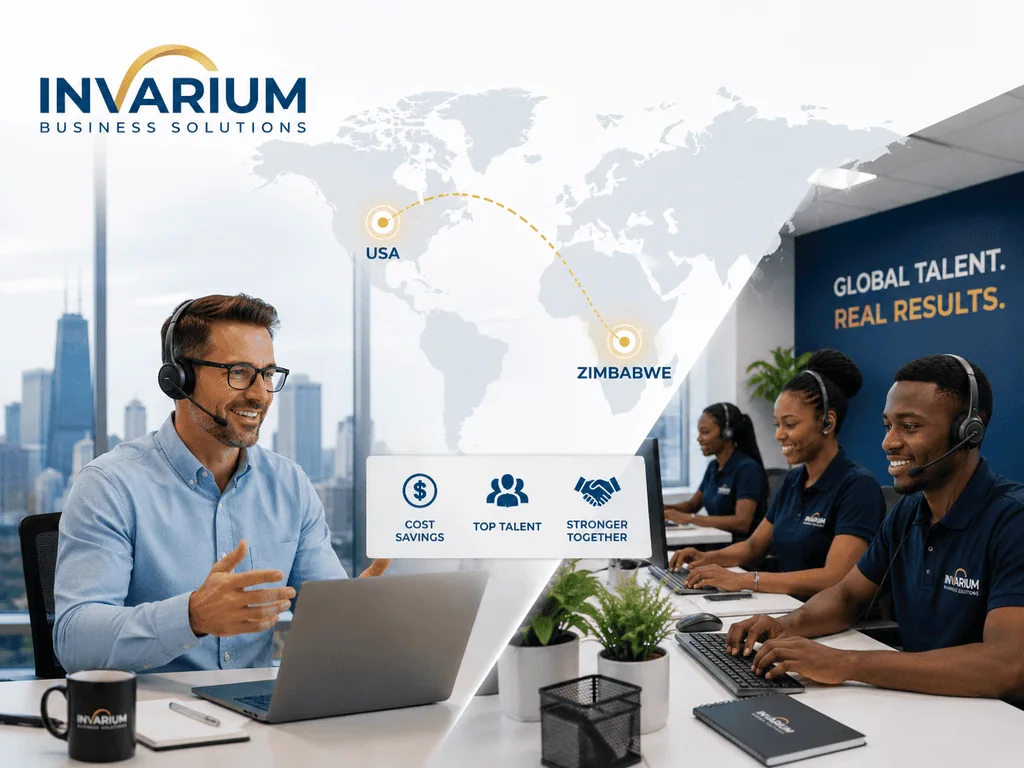
African outsourcing services offer labor rates that are meaningfully lower than what U.S. companies pay domestically, without the quality degradation that cheaper alternatives sometimes bring. Businesses that partner with providers like Invarium Business Solutions — a U.S.-managed outsourcing operation staffed by skilled professionals in Zimbabwe — are finding that they can reduce their staffing costs by 40 to 60 percent while maintaining or improving service quality.
That range is significant. For a growing company burning capital on customer support headcount, that difference can meaningfully extend runway or fund additional growth.
Time Zone Compatibility
One underappreciated advantage of African outsourcing is the time zone reality. Zimbabwe operates in the CAT (Central Africa Time) zone, which is UTC+2. That puts it well within reach of U.S. business hours for structured overlap. With the right scheduling, East Coast morning shifts align with African afternoon hours, making real-time collaboration with U.S. management teams entirely practical — and far easier than coordinating with teams in South or Southeast Asia.
The U.S.-Managed Model: Why It Matters
There is a meaningful difference between outsourcing to an African country and working with a company that is managed from the U.S. with operations in Africa. The latter is what Invarium Business Solutions has built.
U.S. management brings accountability structures, communication standards, and business practices that U.S. clients expect. It removes the friction of navigating cultural differences in management style, contracting norms, and escalation processes. Clients work with a U.S.-facing team that speaks their language — in every sense — while benefiting from the cost advantages of an offshore delivery model.
This hybrid structure is increasingly where serious BPO buyers are looking. The risk that has historically made companies hesitant about African outsourcing — concern over oversight and accountability — is directly addressed when a U.S. entity owns the operation and is accountable for the outcome.
Industries Leading the Shift
Ecommerce
Online retailers were among the earliest adopters of outsourced customer support, and they are finding African partners increasingly attractive. The volume of tickets in ecommerce is high, the work is trainable, and the cost pressure is real. Whether it is order status inquiries, return processing, or review management, ecommerce brands have found that outsourcing these functions to a well-run African team allows them to scale support without scaling headcount costs at the same rate.
Healthcare Support
Healthcare organizations need back-office and administrative support that is accurate, discreet, and reliable. Medical admin outsourcing — appointment scheduling, patient intake support, insurance verification queries — does not require clinical credentials. It requires diligence, attention to detail, and strong written English. These are qualities that the Zimbabwean workforce delivers well.
Startups and SMBs
Startups often face the most acute pressure around support costs. They need to provide good customer service to survive and grow, but they cannot always afford to hire multiple full-time support staff in the U.S. African outsourcing services offer these companies a credible path: professional support teams at a cost structure that makes sense at the early and growth stages.
Explore the full range of services offered by Invarium Business Solutions to understand where African outsourcing can plug into your operations.
What to Look for in an African Outsourcing Partner
Not all providers are equal, and the growing interest in Africa has naturally attracted a range of operators with varying levels of sophistication. When evaluating partners, U.S. companies should look for:
Transparent onboarding processes. Reputable providers will walk you through exactly how your team will be recruited, trained, and managed. Review the onboarding process to understand what that looks like in practice before signing anything.
Compliance and data handling standards. Any company handling customer data on behalf of a U.S. business needs to operate to a defined compliance standard. Ask specifically about data security protocols, NDAs, and how compliance is monitored. Invarium Business Solutions publishes its compliance standards openly for prospective clients.
Cultural and management alignment. As noted above, U.S.-managed operations offer a level of alignment that pure offshore arrangements often lack. This is not just about preference — it directly affects communication speed, issue resolution, and the overall quality of the engagement.
The Competitive Window Is Now
Part of what makes African outsourcing compelling right now is precisely that it is still emerging. The market is not yet saturated the way India and the Philippines are. Pricing reflects that. Competition for skilled workers is lower, which means retention is often better. And companies that build relationships with strong African providers now are establishing advantages that will be harder to replicate as the market matures.
There is a reason analysts who track the global BPO industry are paying close attention to Africa. The fundamentals — a young, educated, English-speaking workforce; improving digital infrastructure; favorable time zone positioning for U.S. markets — are not going away. They are getting stronger.
Is African Outsourcing Right for Your Business?
If your business is spending heavily on customer support, administrative functions, or back-office operations — and you are open to a model that reduces that cost without sacrificing quality — then the answer is almost certainly yes.
The question is not whether to outsource to Africa. The question is which partner you choose and how you structure the relationship. Companies that approach this strategically, with a clear scope of work and a partner that has real accountability structures in place, consistently report positive outcomes.
To learn more about what a partnership looks like, visit the Invarium Business Solutions about page or schedule a call directly with their team.
Final Thoughts
The growth of African outsourcing services is not a trend driven by hype. It is driven by hard economics and genuine talent availability. U.S. companies are outsourcing to Africa because it works — for their bottom line, for their customers, and for their operational flexibility.
If you have been watching this space from the sidelines, the window to get ahead of the curve is still open. The companies building Africa-based support infrastructure today are making decisions they will look back on as smart moves.
Invarium Business Solutions is a Chicago-based BPO company offering U.S.-managed outsourcing solutions powered by skilled professionals in Zimbabwe. Explore current career opportunities or contact the team to start a conversation.